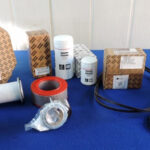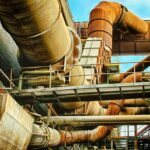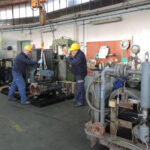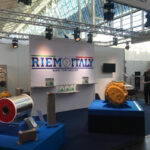


Compressed air and its field of application, typically approached by Riem Italy with new and used compressors with 0-hour overhaul.

Gennaio 9, 2023
Compressed air, like electricity, has such a wide range of uses that it is difficult to summarize its applications.
summarize its applications. In short, it can be said that the quality of air required by
production processes selects two types of medium-pressure compressors (from 4 to 10 bar):
lubricated compressors and oil-free compressors. Lubricated compressors are the most widely used
and, in most cases, are powered by electric motors with a power output
a few kW (compressors for tire repair shops, roadside service stations, and
other…) and the most demanding applications (cement manufacturers, or cement factories and manufacturers of
car and/or industrial and agricultural machinery tires…).
Oil-free compressors are most widely (almost universally) used in various sectors: dental technology, pharmaceuticals, food, paper, aeronautics, textiles, and large distribution lines. The power ratings of
machines intended for these sectors range from 3 kW (dental technology, laboratories
various) to 900 kW. Both types of compressors are divided into: reciprocating piston compressors
and rotary screw compressors. Above 900 kW per machine,
centrifugal compressors, which are dynamic and have a continuous flow. RIEM ITALY operates successfully in ITALY and
abroad, maintaining and marketing machines from various BRANDS, including
the most prestigious and representative, such as: CECCATO, GARDNER DENVER, COMPAIR, CHEMPION,
ROBUSCHI.
RIEM ITALY’s offer is considered attractive because it is divided into different proposals
ranging from rental to the sale of new and/or used and reconditioned compressors
hours. In recent years, there has been a significant increase in the sale of
used and reconditioned compressors with zero hours. This aspect, which is not reflected in previous
historical data, is probably due to the more insistent and unavoidable need for savings on the part of
small, medium, or large operators. According to analysts, this situation is
caused by increases in raw materials, transport, and energy, with consequent
increases in production costs.