

How to adjust a volumetric compressor?
Febbraio 11, 2021
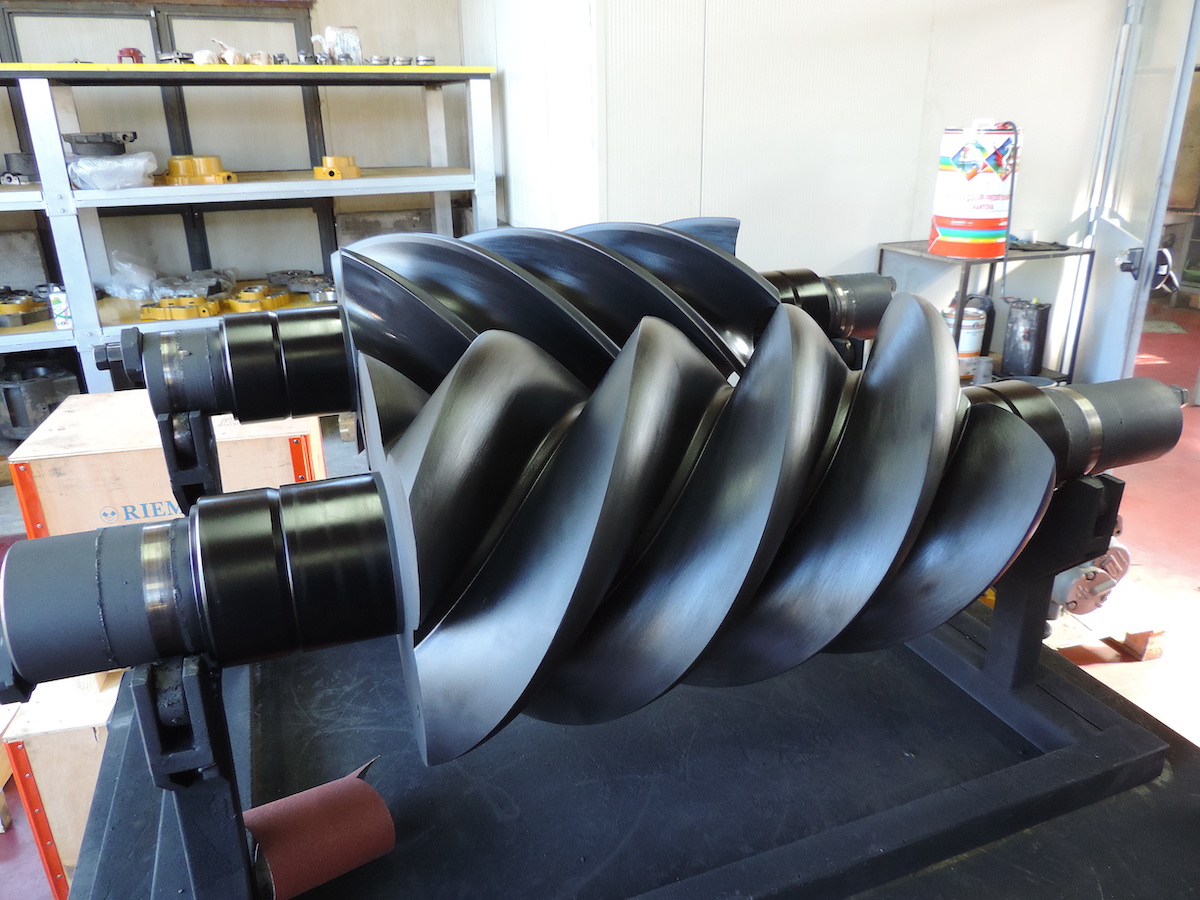
A volumetric compressor, which we discussed in previous articles, has as its main feature the presence of multiple compression chambers for air or gas, sealed on the inlet side. As gas or air enters, the volume inside these compression chambers decreases until the desired value is reached, at which point the compressed elements can be discharged through the outlet system.
REMEMBER: Dynamic compression and volumetric compression
Once you understand how volumetric compression works, you can ask yourself a new question: can volumetric compressors be regulated? If so, how?
How to regulate volumetric compressors
Volumetric compressors can of course be adjusted, and this can be done in six different ways: pressure relief, bypass, inlet throttling, pressure relief, start/stop, adjustment
Pressure relief
Originally, a safety valve was used to adjust the pressure of a volumetric compressor, with the specific task of releasing excess air. Today, however, in most cases a servo valve controlled by a regulator is used. This element allows for greater control over the pressure but, above all, it overcomes a limitation of the valve, namely that of being able to guarantee emptying in the event that the compressor is started under pressure.
For small compressors, it is also possible to evacuate the machine simply by opening the valve fully, thus allowing the compressor to operate under atmospheric pressure (thereby ensuring energy savings and efficiency).
Bypass
Compressor regulation with bypass adopts the same principle as pressure relief, with the difference that the discharged air is cooled and then returned to the compressor inlet. This is a regulation tool used mainly in process compressors.
Inlet throttling
This is perhaps the least effective method of all and is used only to a minimal extent. It consists of reducing the flow of air or gas by increasing the compression ratio based on the vacuum induced at the compressor inlet. The inlet throttling control method leads to high energy consumption as it can only “regulate” 10% of a machine’s maximum capacity.
Discharge with throttled inlet
Pressure discharge with throttled inlet is undoubtedly the most widely used method of regulating a volumetric compressor. Thanks to its efficiency, it is widely used to ensure maximum adjustment range with low energy consumption: with a compressor running at no load, energy consumption is equal to 15-30% of full load power. This efficiency is due to an inlet valve that is closed and an exhaust valve with a small opening that allows gas and air to escape from the compressor. With this configuration, we refer to inlet vacuum (closed valve) and low back pressure (small opening on the discharge valve). To prevent leakage during compression-decompression, it is essential that air and gas are discharged quickly, taking care to leave a very limited volume of air.
Start/Stop
Another method of regulation, perhaps much more drastic but widely used for compressors with a power rating of less than 5-20 kW, is to stop the electric motor when the pressure reaches its limit value. The motor will then restart as soon as the pressure falls below this value. This method can be considered very energy efficient, provided that there are not too many starts.
Speed control
The last method for regulating the pressure of a volumetric compressor is to act directly on the speed, i.e., on its flow rate.
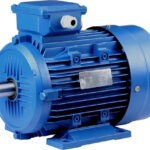
The flow rate of a compressor is determined by the motor, which can be combustion, electric, or gas-powered, controlled by frequency. By acting on the flow rate, it is possible to maintain a constant outlet pressure, thus reducing energy consumption.
Riem Italy: compressor analysis and energy optimization
The Riem Italy team is very sensitive to the issue of energy saving and the efficiency of its machines. For this reason, it adopts effective countermeasures based on each type of compressor produced. This means that at Riem Italy, in addition to the necessary standardized processes, there is always a careful analysis of each component of the systems in order to find perfect and ad hoc volumetric regulation solutions.
If you would like to find out more about our activities and products, please contact us via our dedicated page.